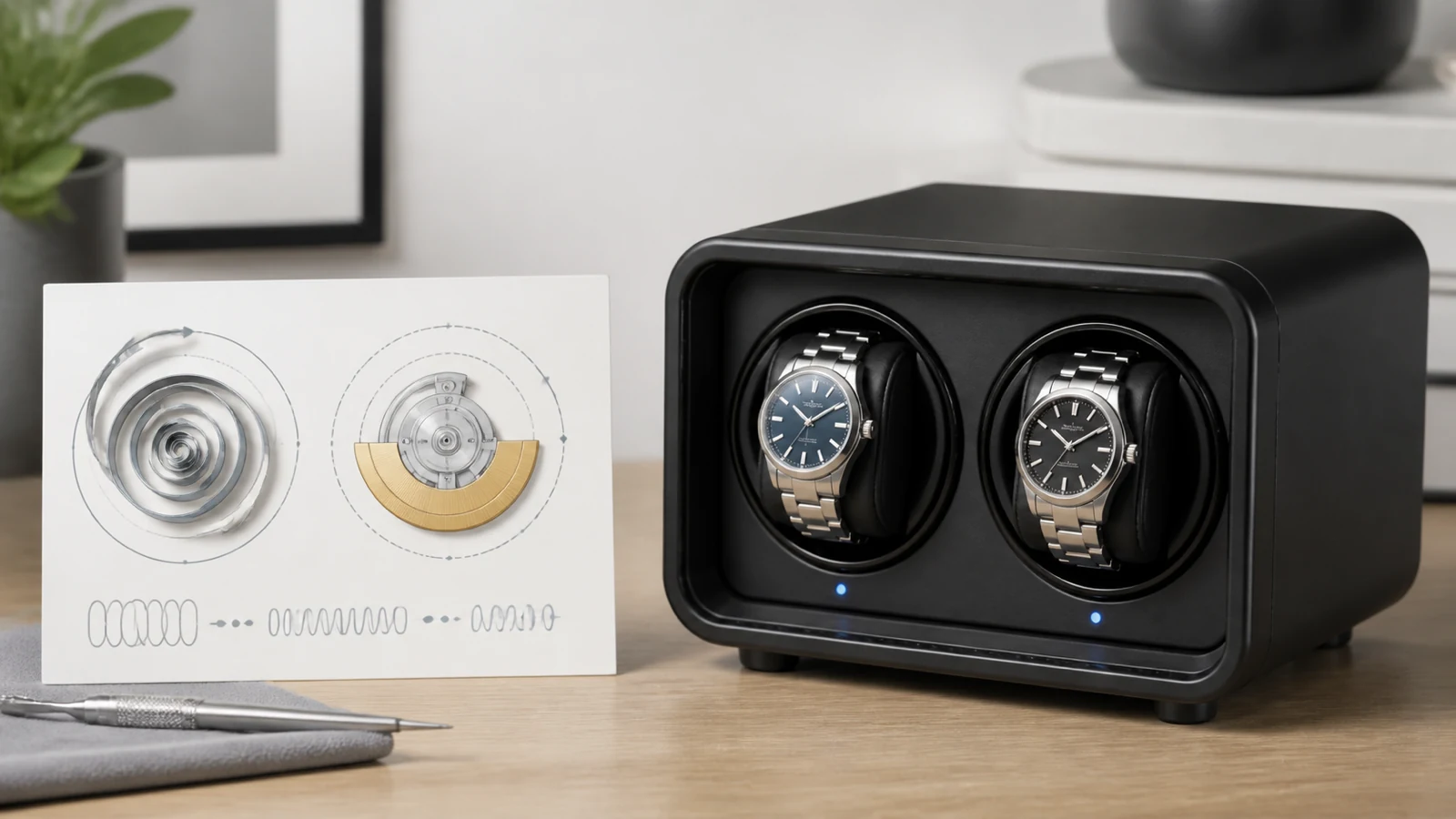
Can a Watch Winder Overwind an Automatic Watch?
A correctly used watch winder should not classically overwind a modern automatic watch, because automatic movements are designed with a slipping mechanism that prevents the mainspring from being wound beyond its limit. The real risks are different: using the wrong watch type, choosing excessive settings, relying on a poor-quality motor, or ignoring servicing.
A UK boutique explainer from 1010 Boutique on whether winders are bad for watches describes the clutch-type mechanism used by automatic movements. Technical explainers such as Enigwatch's overwinding myth article discuss slip-clutch behaviour while separating it from excessive TPD concerns, and Luxury Watch Group's UK guidance similarly notes that modern automatics are designed to prevent classic overwinding when correctly configured.
The myth and the real issue
The myth says a winder keeps forcing power into the spring until something breaks. That is not how a modern automatic is meant to work. The rotor winds the mainspring, and once tension reaches the designed level, the bridle can slip instead of continuing to build damaging tension.
That does not make every winder choice harmless. A badly matched TPD setting can keep a movement running more than necessary, a cheap or magnetically suspect motor can introduce other concerns, and a vintage watch with uncertain condition deserves more caution than a modern daily wearer.
Practical safety checklist
- Use winders only for automatic mechanical watches, not quartz or manual-wind watches.
- Start with conservative TPD and direction settings rather than maximum rotation.
- Use calibre-specific guidance when available, especially for unusual movements.
- Stop using the winder if the watch behaves oddly, loses reserve unexpectedly or feels rough.
- Keep normal servicing on schedule; a winder is not a substitute for a watchmaker.
- Be cautious with vintage watches, unknown service history and delicate complications.
What this means for buying
The question is not simply whether a winder can overwind. For a modern automatic, classic overwinding is not the main fear. The better buying question is whether the winder lets you choose sensible settings, holds the watch securely, runs consistently and suits the place where you will actually use it.
If you own one simple automatic and do not mind resetting it, you may not need a winder at all. If you rotate automatics and want them ready, choose by settings, fit and placement rather than by dramatic safety promises.