Do I Need A Watch Winder Uk
For most people with one simple automatic watch worn every day, the answer is no: you do not need a watch winder. A winder becomes useful when an automatic spends enough time off the wrist to stop, when you rotate two or more watches, or when resetting the watch is irritating because of the date, day or other complications.
That is the same broad conclusion reflected in UK watch retail guidance: a winder is best treated as a convenience tool, not a compulsory accessory for every automatic owner. Luxury Watch Group's UK guide to watch winders frames the decision around how the watch is worn, and Paint Pulse's UK complete guide for automatic watches points to multiple watches, occasional wear and complications as the cases where a winder starts to make sense.
The simple decision
Start with your real week, not the product category. If the watch is on your wrist most days and you do not mind resetting it after a quiet weekend, a winder is likely unnecessary. Automatic movements are designed to be wound by wear, and occasional manual winding and setting is normal ownership, not a failure.
The calculation changes when the watch lives in a drawer from Monday to Friday, when you alternate between two automatics, or when the watch has a fiddly calendar that makes every reset feel like admin. In that situation, the winder is solving a practical problem: keeping a watch ready to wear.
Quartz watches and manual-wind watches sit outside this decision. A quartz watch does not need a mechanical winder, and a manual-wind watch should not be put on one as a substitute for winding the crown by hand. This guide is about automatic mechanical watches only.
A quick checklist before buying
- You wear one simple automatic daily: skip the winder unless you actively want display storage.
- You rotate two automatics through the week: a winder may save regular resetting.
- You own an automatic with date, day, moonphase or GMT setting friction: the convenience case is stronger.
- You plan to keep it beside the bed: quiet operation and light control matter more than glossy photos.
- You have limited sockets or want shelf placement: power format matters before finish colour.
Who should skip it
Skip a winder if you own one automatic, wear it often, and find setting the time acceptable. Also skip it if most of your watches are quartz. In those cases, the money is usually better spent on a decent storage case, a service fund, or simply learning the correct way to hand-wind and set your watch.
A winder also does not replace servicing. It can keep an automatic moving, but it cannot clean oil, regulate timekeeping or fix a movement that is already behaving poorly. Treat it like a convenience stand, not a maintenance machine.
When the next step is sensible
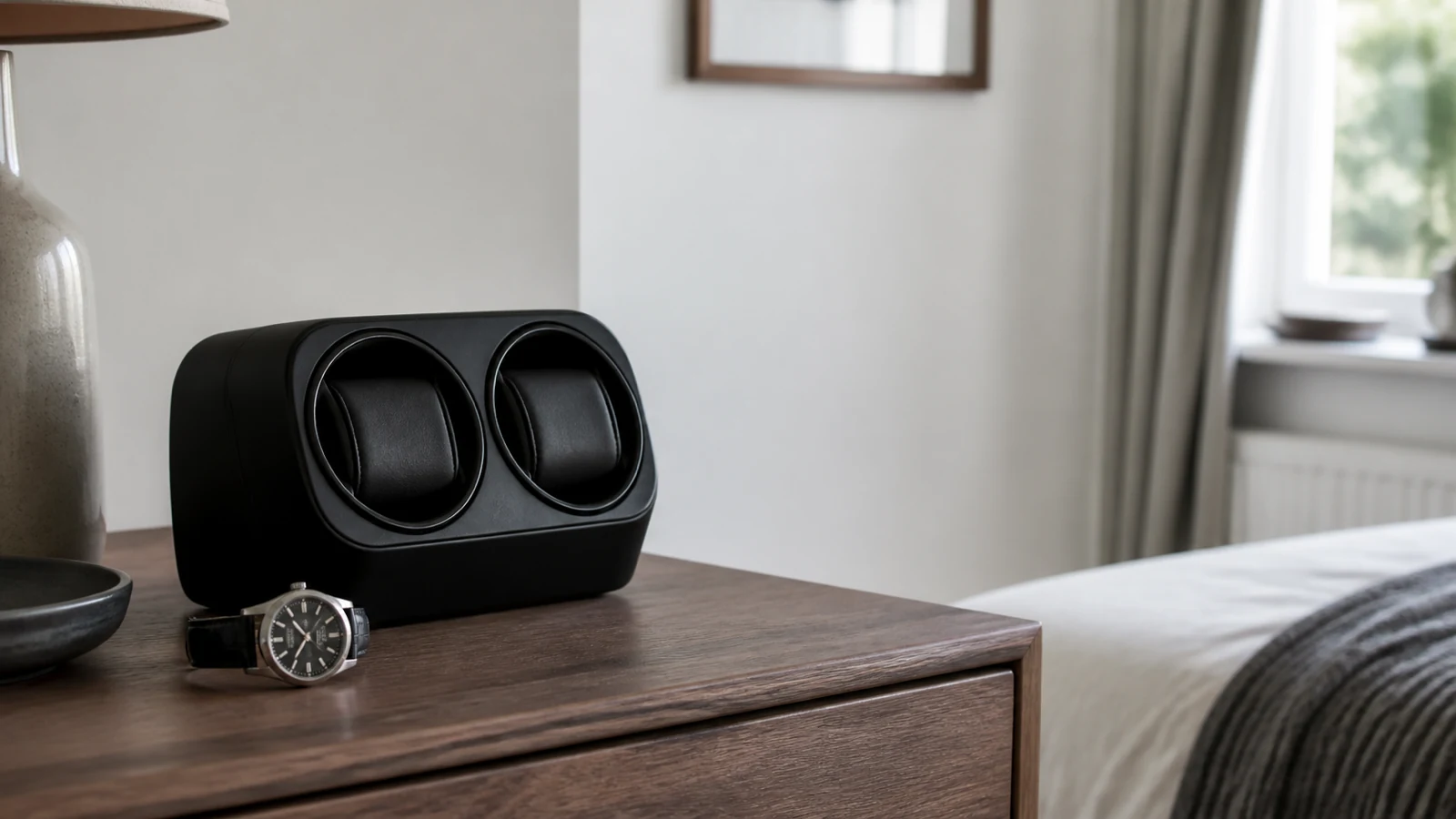
If your problem is two-watch rotation, look at capacity first: single, dual or larger cabinet. A compact dual model can make sense for two automatics without committing to a bulky cabinet. If your problem is room layout, compare rechargeable and plug-in formats before you compare finishes.
The best purchase decision is boringly practical: buy only when you can name the exact inconvenience it removes. If the answer is just that winders look nice, that is a preference, not a need.